
Unit 1: Theories, Policies and Practices
Micro-teaching Reflection
My 20-minute micro-teach was structured in three parts: a 5-minute introduction outlining the task and its key themes; 10 minutes of independent engagement; and 5 minutes of sharing. Participants were invited to choose a random object and imagine the story it holds or embodies – to think with it, and possibly as it. The aim was to shift perspective toward the more-than-human, encouraging participants to re-story the object beyond its dominant narrative and to draw on sensory knowledge, intuition and relational thinking. I hoped this would open space for alternative meaning-making and invite reflection on how personal histories shape interpretation.
The task was informed by object-based learning (OBL), particularly the emotional or extra-rational dimensions of material culture analysis discussed in a guest lecture by Dayna Tohidi (Tohidi, 2024, pers. comm.) and grounded in Jules Prown’s methodological framework (Prown, 1982). In Prown’s second stage — deduction — sensory and emotional responses are treated as legitimate analytical evidence, recognising that interpretation is shaped by disciplinary training, cultural background and lived experience. In this sense, the workshop aimed to develop observational skills, visual literacy, narrative communication and aesthetic judgement, while extending OBL into a more relational and introspective realm.

Figure 1. Miller, S. (2026) Micro-teaching Session Plan. (Author’s own, 2026). Author’s own.
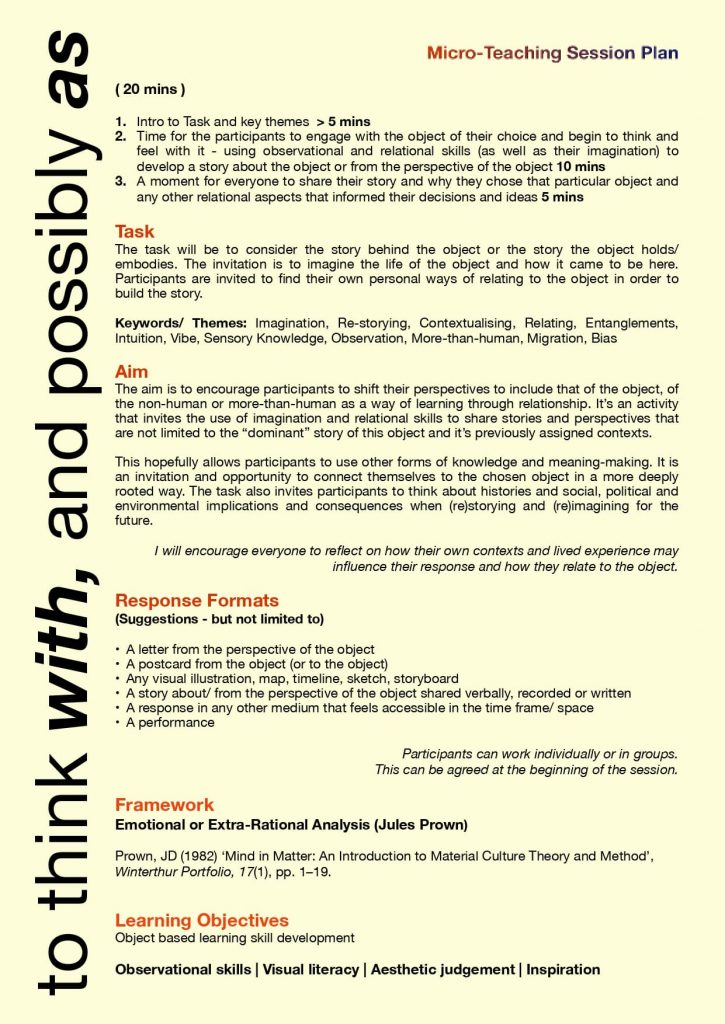
When planning the session, I consciously simplified a longer workshop I had previously devised. I anticipated that entering an imaginative, relational state might take time, and I wanted to protect space for immersion rather than overloading the session with theory. Objects and materials were laid out in advance, and participants could respond in any medium, whether written, visual or performative and I gave the option to work individually or together.
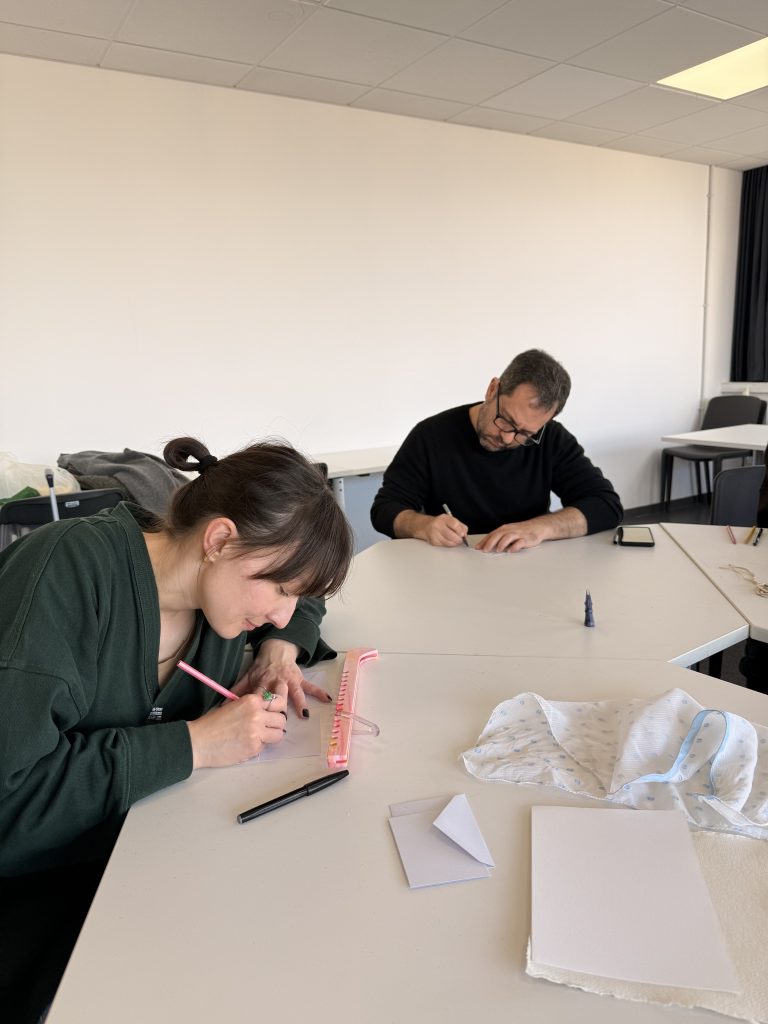
Figure 2. Miller, S. (2026) Participants of my micro-teaching session engaging in the task, photographed at LCC. [photograph]. Author’s own.
The session unfolded quietly and with focus. After a few prompts, everyone moved quickly into an internal, contemplative space. It was noticeably the quietest micro-teach so far; the room felt held by concentration. During the sharing moment, participants reflected on why they chose their objects and how their narratives emerged. The stories ranged from playful to political, revealing unexpected projections and interpretations.
Feedback was affirming and generative. Several peers described the exercise as fun, imaginative and calming, appreciating the openness and the more-than-human framing. Some noted that it made ordinary objects feel more significant. At the same time, one participant shared that they struggled to begin and had to let go of the fear of “getting it wrong.” There was also feedback that the slides could have been visually simpler, with clearer scaffolding, and a key question raised was how the session might be extended into clearer learning objectives.
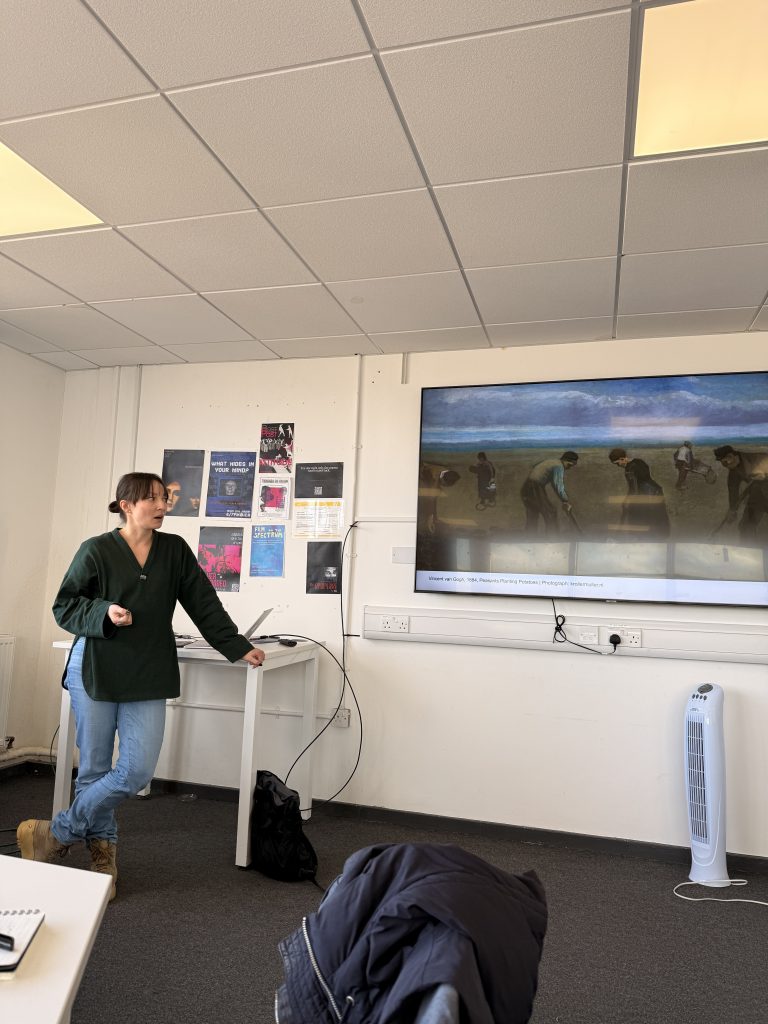
Figure 3. Miller, S. (2026) Daphne facilitating her micro-teaching session using Prown’s method, photographed at LCC. [photograph]. Author’s own.
Experiencing a peer’s micro-teach using Prown’s three-stage forensic method — description, deduction and hypothesis (Prown, 1982) — prompted further reflection. The structured progression from close observation to interpretative hypothesis offers analytical containment and shared grounding. In contrast, my session moved more quickly into imaginative and affective interpretation. I now see the pedagogical value of sequencing these approaches: beginning with forensic description to anchor attention before moving into emotional and relational readings.
Peer feedback strengthened my understanding of the relationship between openness and scaffolding. While I value autonomy and imaginative risk, I learned that freedom requires careful framing. Although I had clear intentions — developing observational acuity, relational thinking and critical self-awareness — I did not make these explicit in the visual presentation. In future iterations, I would include clearly articulated learning outcomes on the slides, mapping them directly to the stages of the activity.
If extended into a longer workshop, I would begin with a short contextual provocation, for example an excerpt from Ursula K Le Guin’s Carrier Bag Theory of Fiction (Le Guin, 1986), to frame storytelling as a collective, relational act. I would then introduce a brief descriptive stage drawn from Prown’s method before moving into individual and collaborative re-storying. A short scaffolding exercise around the idea of “vibe” could support articulation of somatic and intuitive responses, followed by structured reflection on how cultural background and lived experience shaped narrative decisions. This would reconnect the exercise to material culture theory and to broader discussions around Indigenous knowledge systems and non-human agency, rooting it more clearly in the social and epistemological contexts from which it emerges.
Ultimately, this micro-teach reminded me that facilitation is an act of calibration — between structure and spaciousness, analysis and intuition. Holding imaginative space requires both trust and containment. That tension feels like a productive site of learning within my evolving teaching practice.
References
Prown, JD (1982) ‘Mind in Matter: An Introduction to Material Culture Theory and Method’, Winterthur Portfolio, 17(1), pp. 1–19.
Le Guin, UK (1986) ‘The Carrier Bag Theory of Fiction’, in Dancing at the Edge of the World. New York: Grove Press.
Images
Figure 1. Miller, S. (2026) Micro-teaching Session Plan. (Author’s own, 2026). Author’s own.
Figure 2. Miller, S. (2026) Participants of my micro-teaching session engaging in the task, photographed at LCC. [photograph]. Author’s own.
Figure 3. Miller, S. (2026) Daphne facilitating her micro-teaching session using Prown’s method, photographed at LCC. [photograph]. Author’s own