
Unit 1: Theories, Policies and Practices
Reflection
Object-Based Learning (OBL) is something I’ve engaged with before, but experiencing it through my peers’ micro-teaching sessions shifted something in me. It moved from being a useful educational tool to something much more relational, and potentially transformative to my teaching practice.
One of the most impactful methods I encountered was Prown’s forensic reading of an object. Seeing it facilitated in real time helped me understand how structured observation — centring description before interpretation — slows students down in a generative way. Instead of rushing to meaning, they can sit with their senses, with materiality, surface, weight and texture. According to Prown (1982), this sequencing from description to deduction to speculation encourages critical engagement grounded in evidence. In practice, I saw how this method makes abstract thinking tangible. It offers a structure for students who might otherwise feel overwhelmed by interpretation. I also noticed how it felt to enquire and discover and guess together as a participant within the group receiving this workshop. I found the experience simple but very effective in engaging my attention and interest in the object at hand.
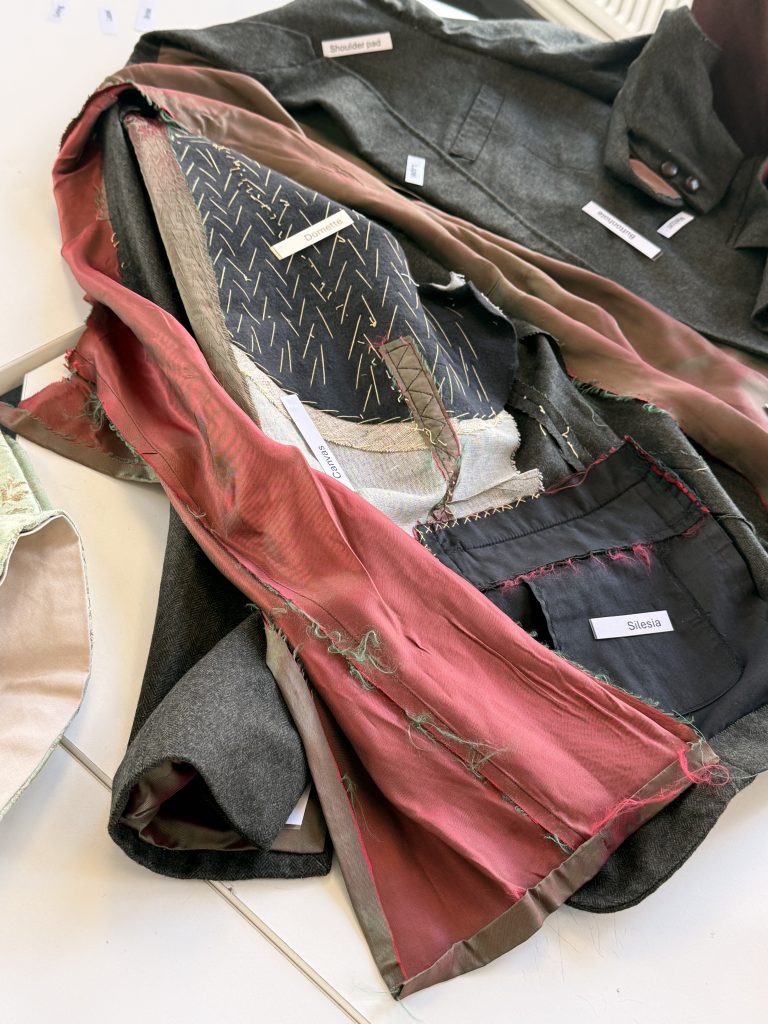
Figure 1. Miller, S. (2026) Photograph of a jacket taken during Greg’s Object Based Learning micro-teaching workshop.[photograph]. Author’s own.
Chatterjee and Hannan (2015) argue that OBL helps communicate troublesome knowledge by making abstract concepts concrete. I witnessed this directly. The object became a mediator — it held the conversation. I believe that students who might struggle with theoretical language might find that there are more entry points through sensory engagement. Delving deeper into OBL reaffirmed to me that not all understanding begins in language; sometimes it begins in touch, memory and association.
The more intuitive method for me, however, was the emotional or extra-rational reading of an object. This resonated with my own embodied facilitation practices. When students are invited to consider how an object makes them feel, what memories it evokes, or what relational dynamics it suggests, something shifts. The object becomes less artefact and more of an encounter.
Having said that, this approach carries more responsibility. Emotional readings can surface personal histories, including trauma. Without trust, this method risks becoming superficial or, worse, destabilising. Chatterjee and Hannan (2015) emphasise the importance of structured facilitation in sensory learning environments. For me, this translates into building relational safety before inviting deeper emotional excavation. It cannot be a one-off exercise dropped into a room of strangers. It requires groundwork and building a deeper, more durational connection to my students before integrating this kind of approach into a OBL workshop for them.
Within MADSISF, where students interrogate social, political and environmental challenges, I see real potential for OBL to support students reflection on their intention, impact and positionality. Objects can act as proxies for systems. They can help students externalise and examine their biases. They can build empathy — towards the object and also towards the networks of labour, extraction, and culture embedded within it.
OBL also offers a way to slow down the design process. In a culture that often privileges rapid ideation and production, the act of sustained observation becomes something quite radical. It asks: What are you really looking at? What assumptions are you making? Where are you positioned in relation to this material?
Moving forward, I want to integrate OBL as a reflective checkpoint within projects. Perhaps mid-way through a unit, students could bring an object that represents their project’s core tension. Using a combination of forensic and emotional readings, we could collectively unpack intention versus impact. What does the object reveal that their proposal does not? What ethical questions surface through attention to material?
Through attending the guest lecture and experiencing the micro-teaching from both the facilitator and student perspective, it became strikingly clear to me that at its best, OBL is not about the object itself but more about cultivating attentiveness. For me, an attentiveness to material, context and self feels foundational to an ethical creative practice, and it is an approach I hope to cultivate in the students of MADSISF.
In my next workshop, I plan to pilot a short OBL exercise using both forensic and emotional readings, followed by a structured group reflection to better understand how students engage with each approach. I will also observe how different students respond to sensory versus analytical entry points, in order to refine how I integrate these methods in future sessions.
References
Chatterjee, H.J. and Hannan, L. (2015) Engaging the Senses: Object-Based Learning in Higher Education. London: Routledge.
Prown, J.D. (1982) ‘Mind in Matter: An Introduction to Material Culture Theory and Method’, Winterthur Portfolio, 17(1), pp. 1–19.
Images
Figure 1. Miller, S. (2026) Photograph of a jacket taken during Greg’s Object Based Learning micro-teaching workshop. [photograph]. Author’s own.